Home Insteading With Cooperative Extension (Week 56)
(Updated: May 11, 2021, 6:43 a.m.)
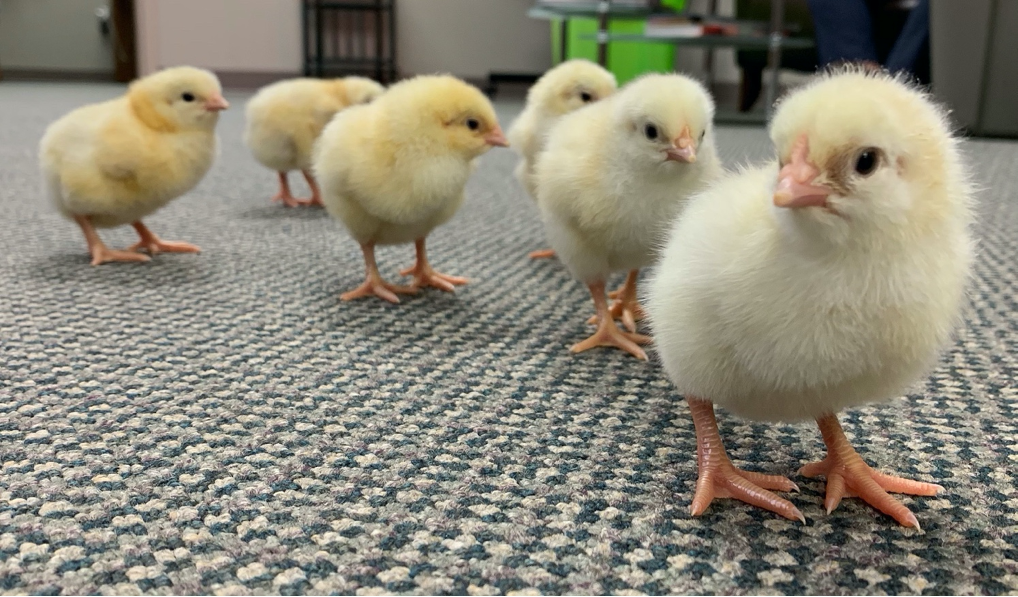
2nd Graders at White Oak Participate in 4-H Embryology
Camaryn Byrum, 4-H Agent
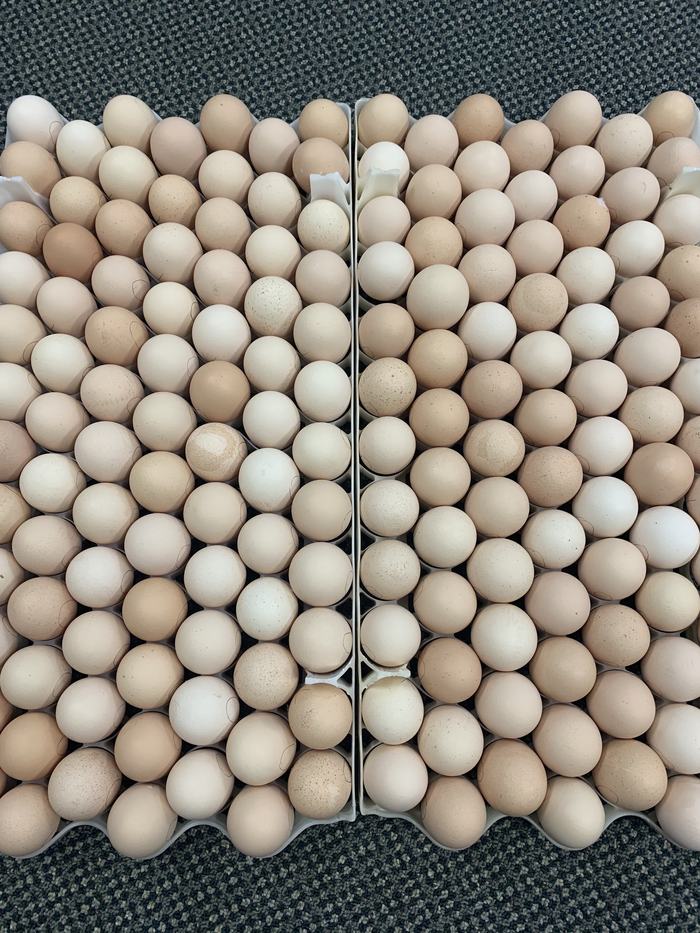
2nd graders at White Oak Elementary School began embryology last week. 4-H Embryology is a program where an incubator is used to hatch chicks in the classroom. Each 2nd-grade class was provided an incubator and fourteen fertilized eggs. Students will take turns checking water levels, temperature, and humidity levels of the incubators. Three times each day, the eggs are turned to prevent the embryo from touching the inside of the shell. The incubation period is 21 days. Over these three weeks, students will learn what is taking place inside the egg on that particular day. For example, on Day #6, the beak and the egg tooth are beginning to form, and on Day #12 down feathers are visible and toes are fully formed.
Day #21 is known as “hatch day.” Students are always eager to see the chicks breaking through their shells. After a chick hatches and is fully dry, they will be moved to a brooder box in the classroom. On hatch day, little peeps can be heard all throughout the 2nd-grade hallway.
LeAnn Nixon, one of the 2nd-grade teachers at White Oak commented, “Many of our students will not get the chance to see chickens hatch. They are so excited to learn about the life cycle of chickens. They love turning the eggs each day and checking the water level.” The 4-H embryology curriculum aligns with the 2nd-grade standard course of study on life cycles.
Plants are Tough
Katy Shook, Area Horticulture Agent
Plants are tough. They are genetically predispositioned for survival. But what happens when a plant receives influences beyond the norm, like recent weather extremes? The life cycle, health, and age of a plant will all influence how well it responds.
Annual plants complete their life cycle in one year. From seed to seed, there are no remaining vegetative parts of the plant. These plants have “one shot” at survival. Unfortunately, the lack of an established root system and above-ground vegetation reduces the availability of stored energy for recovery. Annuals that are very young and/or not established, are less likely to recover from extremes. Perennials, shrubs, and trees have a greater chance of survival.
Similar to human health, the overall health of a plant can influence how well it will recover from stress. Plants that are suffering from pre-existing conditions such as age, poor management, or pest damage, are less likely to survive extremes. If a plant is already in decline, the damage will likely worsen and intensify. Healthy plants usually recover, but may be temporarily affected.
The age of a plant can influence recovery. Young plants tend to recover better from extremes. The production of new growth helps heal wounds in leaves, stems, and roots. Damage from storms is usually less severe. Permanent damage can take 1 to 2 years to appear; keep an eye on older trees that may not immediately show signs of stress.
To help plants recover, follow basic TLC recommendations: water during drought, fertilize lightly; and avoid further damaging the plant. For more information, contact the Ask A Master Gardener Helpline at (252) 482-6585.
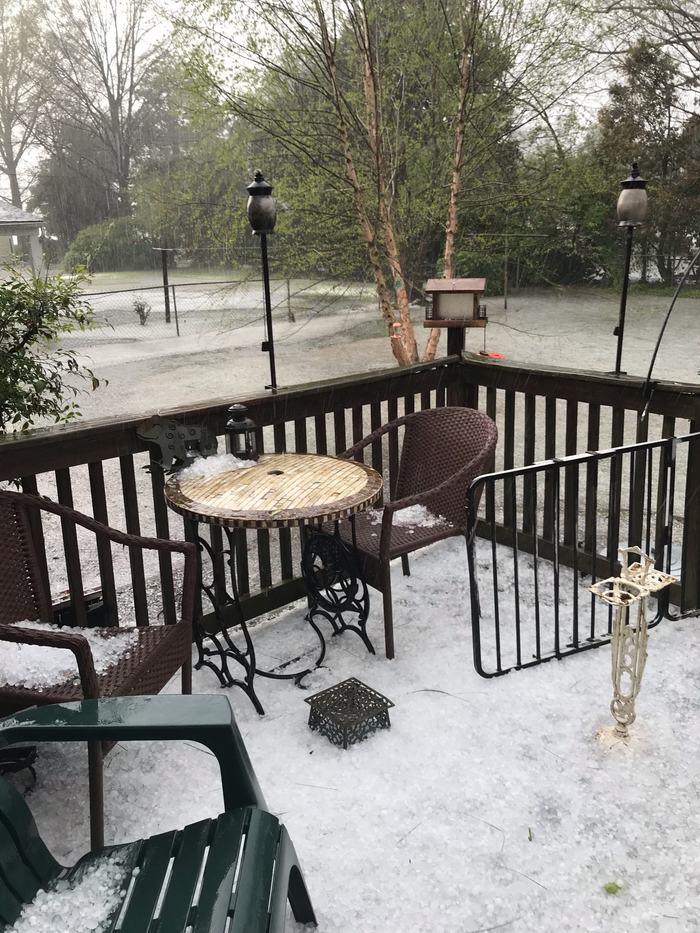
Hail in the landscape. (Photo from Lenita Campen)
2021 Virtual Women's Conference
Mary Morris, Family and Consumer Sciences Agent
May 9-15 is National Women's Health Week! N.C. Cooperative Extension in Pasquotank County is hosting a 2021 Virtual Women's Health Fair on May 10-14, along with professionals from across North Carolina, and as far away as Massachusetts. These professionals will be delivering timely information for women as well as those who love them. Daily topics will address health issues, fitness, nutrition, stress management, cooking, and more. The event is free and open to the public. Citizens can register through Eventbrite. Participants can register for one, several, or all sessions. The event is being hosted virtually to allow more attendees than are currently allowed through COVID-19 restrictions and to allow instructors to participate from remote locations. For more information, please contact Pasquotank Cooperative Extension, 252-338-3954.